
Scattered Spider Help Desk Social Engineering: How Attackers Use Your Own Support Process Against You
Scattered Spider help desk social engineering is one of the most documented and costly attack techniques of the last three years — and most small and mid-sized businesses have done nothing about it. The group, tracked by the FBI and CISA under the name Scattered Spider (also known as UNC3944 and 0ktapus), does not break through your firewall. It does not exploit an unpatched vulnerability. It calls your help desk, pretends to be one of your employees, and talks your own support staff into handing over access to your network. This post breaks down exactly how that works, who it has already hit, and which identity verification controls stop it.
- The Threat Landscape: What Makes Scattered Spider Different
- Who It Affects: This Is Not Just an Enterprise Problem
- How the Attack Works: A Step-by-Step Breakdown
- Real Examples: Documented Incidents and FBI-CISA Findings
- Defense Posture: Identity Verification Controls That Actually Work
- What to Ask Your IT Firm Right Now
- The Uncomfortable Truth About Technical Controls
The Threat Landscape: What Makes Scattered Spider Help Desk Social Engineering Different
Most threat actors work inside the technical layers of your environment — scanning ports, exploiting unpatched software, deploying credential-stealing malware. Scattered Spider works in the human layer. The group is composed primarily of English-speaking young adults, many believed to be based in the United States and United Kingdom. That gives them a significant and underappreciated advantage: they do not sound foreign. They have no accent that might trigger suspicion. They sound exactly like the employee they are pretending to be.
The FBI and CISA issued a joint Cybersecurity Advisory on Scattered Spider in November 2023, documenting the group’s tactics, techniques, and procedures in detail. It describes a financially motivated criminal group known for data extortion and ransomware attacks targeting large companies and their contracted IT help desks. The advisory is publicly available at CISA.gov (Advisory AA23-320A) and is required reading for anyone responsible for IT or security operations.
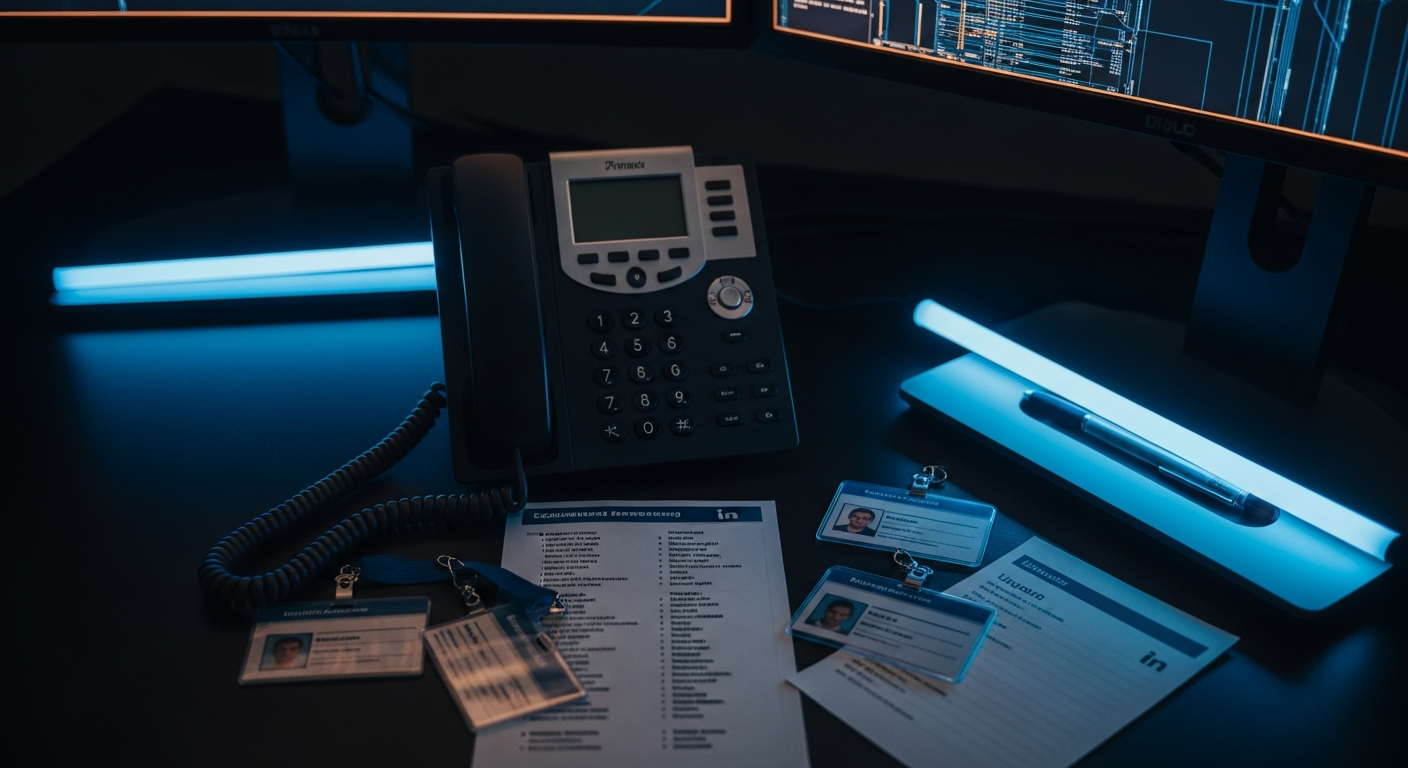
What separates Scattered Spider from opportunistic phishing crews is preparation and patience. Before any call is made, the group researches its target — scraping LinkedIn for employee names and titles, purchasing leaked credential databases, and identifying the specific IT vendor or internal help desk the company uses. By the time an attacker picks up the phone, they already know the victim’s name, employee ID format, and their direct manager’s name.
Who It Affects: This Is Not Just an Enterprise Problem
Early coverage of Scattered Spider focused on large enterprises — MGM Resorts International, Caesars Entertainment, and a string of technology companies were among the high-profile victims. The MGM Resorts breach in September 2023 alone resulted in an estimated $100 million in losses, per the company’s own SEC filing. Caesars Entertainment reportedly paid approximately $15 million in ransom.
Those numbers are attention-grabbing, but they create a dangerous misconception: that this is an enterprise problem. It is not. Here is why smaller organizations are increasingly in scope:
- Smaller companies typically have less formal help desk verification procedures, making impersonation easier.
- Many small and mid-sized businesses outsource IT to a managed services provider — attackers increasingly target the provider’s help desk to reach multiple clients at once.
- The FBI’s Internet Crime Complaint Center 2023 report documented over 880,000 cybercrime complaints with losses exceeding $12.5 billion — a record high — with social engineering attacks representing one of the fastest-growing categories.
- Organizations with fewer than 500 employees are statistically less likely to have formal identity verification protocols for help desk requests, according to industry survey data from CompTIA.
If your business uses a help desk — internal or outsourced — you have a surface area that Scattered Spider’s playbook is built to exploit. Company size is not a shield. Scattered Spider help desk social engineering techniques work just as well against a 50-person firm as a 50,000-person enterprise, especially when that smaller firm shares a managed IT services provider with other clients.
How the Attack Works: A Step-by-Step Breakdown
The FBI-CISA advisory outlines the attack chain in detail. Understanding it is the first step toward building a defense. Here is how a typical Scattered Spider help desk social engineering intrusion unfolds:
Stage 1 — Reconnaissance. The attacker gathers publicly available information. LinkedIn profiles reveal employee names, titles, and tenure. GitHub repositories may expose internal tool names. Data broker sites provide phone numbers and personal details. Leaked credential databases — often purchased on dark web forums for very little money — supply usernames, old passwords, and sometimes answers to security questions.
Stage 2 — Initial contact. The attacker calls the help desk (or submits a support ticket) posing as a specific named employee. They claim a common, low-suspicion scenario: they have a new phone and need to re-enroll their multi-factor authentication, or they have been locked out after traveling. These scenarios are chosen deliberately — they are the most frequent legitimate requests help desks receive.
Stage 3 — Identity bypass. The attacker uses information from reconnaissance to pass standard verification questions. They know the target’s employee ID. They know the last four digits of the target’s Social Security number, available in many leaked databases. They may know the manager’s name and the target’s approximate location. A help desk technician running through a standard verification script has almost no way to tell this call from a legitimate one.
Stage 4 — MFA re-enrollment or SIM swap. Once the help desk grants the request, the attacker either enrolls a new authenticator device under their control, or — in documented cases cited by CISA — contacts the target’s mobile carrier to perform a SIM swap, routing the target’s text-based authentication codes to an attacker-controlled device.
Stage 5 — Lateral movement and data exfiltration. With valid credentials and a working second factor, the attacker logs into corporate systems as the impersonated employee. From there, they move across the environment, escalate privileges, locate sensitive data or backup systems, and either exfiltrate data for extortion or deploy ransomware.
The entire process — from first phone call to full network access — has been documented to take less than two hours in some incidents. There is no malware to detect. There is no anomalous network traffic during the initial stages. The attack is invisible to every technical control that is not specifically watching the identity verification process itself.
Real Examples: Documented Incidents and FBI-CISA Findings
The joint FBI-CISA advisory from November 2023 does not name every victim, but it documents specific behaviors observed across multiple incidents. The following are drawn directly from that advisory and publicly reported breach disclosures:
- In multiple incidents, Scattered Spider actors called IT help desks and convinced technicians to reset multi-factor authentication by providing the target employee’s name, position, and phone number — all gathered from open sources.
- The group used voice phishing calls to impersonate IT staff, calling end users and directing them to attacker-controlled credential harvesting pages under the guise of a required security update.
- In the MGM Resorts breach, reporting by cybersecurity journalist Brian Krebs and others indicated attackers spent approximately 10 minutes on LinkedIn identifying an IT employee before calling the MGM help desk to reset credentials — a clear illustration of how low the barrier to entry is.
- Scattered Spider has been observed impersonating not just employees but also IT vendors and contractors, exploiting the trust help desks extend to third parties without formal verification.
- The group has targeted identity platform accounts specifically, knowing that a single compromised account can provide access to dozens of downstream applications at once.
These are not theoretical scenarios. Each behavior above has been documented by federal law enforcement and attributed to this group across multiple engagements. The pattern is consistent enough to constitute a defined playbook — and your help desk needs a counter-playbook to match it.
Defense Posture: Identity Verification Controls That Stop Scattered Spider Help Desk Social Engineering
Scattered Spider’s playbook has one known weakness: it depends entirely on the help desk failing to verify identity through out-of-band, knowledge-resistant means. Every control below directly addresses a step in the attack chain above.
1. Put your help desk verification policy in writing. A verbal policy is not a policy. Document exactly what information must be provided before any account change — including password resets and multi-factor re-enrollment — is approved. Make that document part of help desk onboarding and review it quarterly.
2. Require manager approval for high-risk actions. Any request to reset multi-factor authentication credentials, change a registered phone number, or modify account recovery options should require documented approval from the requesting employee’s direct manager — delivered through a separate, pre-verified communication channel, not the same call or ticket.
3. Call back on file numbers only. If a caller claims to be an employee, hang up and call them back — but only on the phone number registered for that employee before the request arrived. Never use a number provided during the inbound call. Scattered Spider actors are known to supply attacker-controlled callback numbers during initial contact.
4. Treat every MFA re-enrollment request as a red flag. Multi-factor re-enrollment is the single most common entry point in Scattered Spider help desk social engineering attacks. Every such request should trigger enhanced verification — not the same check used for a password reset. Consider requiring a video call with a visible government-issued ID for any authenticator device change.
5. Stop using knowledge-based authentication for sensitive actions. Questions like “what is your employee ID” or “what are the last four digits of your SSN” are no longer secure. That data is widely available in leaked databases. Move to verification methods that cannot be replicated: a hardware security key, a face-to-face identity check with a manager, or a one-time code sent to a device registered well before the request was made.
6. Lock down self-service MFA re-enrollment. Many identity platforms let employees self-enroll new devices if they can pass basic credential checks. That self-service window is precisely what Scattered Spider exploits. Work with your IT provider to require administrator involvement for any new authenticator device registration, especially for accounts with elevated access.
7. Train help desk staff on social engineering — repeatedly. CISA’s advisory specifically notes that Scattered Spider actors are “convincing and persistent.” A technician who has never encountered a caller who already knows the answers to every verification question — and who is applying steady pressure to move quickly — is very likely to approve a malicious request. Training is not a one-time event. It should be a regular, scenario-based exercise tied to the specific attack patterns documented by the FBI.
8. Monitor identity provider logs for new device registrations and impossible travel. Even after a successful social engineering intrusion, there is usually a window before significant damage is done. Automated alerts for new device enrollments, logins from new locations, or account changes outside business hours can allow a fast response. This kind of monitoring is a core part of a well-designed cybersecurity program — not an advanced optional feature. Our team at xitx.com can help you assess your current identity monitoring posture. Explore our managed IT services to learn more.
What to Ask Your IT Firm Right Now
The following questions will tell you quickly whether your help desk is a Scattered Spider-style attack waiting to happen. They are not trick questions — they are the baseline questions any security-minded executive should be able to get clear answers to.
- What is our written procedure for verifying identity before resetting a multi-factor authentication credential? Can you show me that document?
- Does our current process require any verification that cannot be satisfied with information found on LinkedIn or in a leaked database?
- How do we handle a multi-factor re-enrollment request that comes in outside business hours, or from an employee claiming to be traveling?
- Do we require manager approval through a separate, pre-verified channel before executing any account recovery action?
- Are we alerted automatically when a new device is registered to an existing user account, particularly accounts with administrator-level access?
- When did we last run social engineering awareness training specifically covering voice phishing and help desk impersonation scenarios?
- Do we have a documented policy for verifying third-party vendor support requests before granting access to our systems?
If the answers are vague, undocumented, or absent, you have a gap that aligns directly with the techniques Scattered Spider help desk social engineering uses to generate hundreds of millions of dollars in documented losses. Getting clear answers — and closing any gaps you find — is the most direct risk reduction step available to you right now. Book a Free Cybersecurity Strategy Call and we will walk through your current help desk verification posture in plain terms.
The Uncomfortable Truth About Technical Controls
Most organizations put the majority of their security budget into technical controls — firewalls, endpoint protection, email filtering, vulnerability scanning. Those investments are not wasted. But Scattered Spider’s documented success rate against well-resourced enterprises makes one thing clear: technical controls cannot protect you from an attack that enters through a phone call and exits with valid credentials.
The FBI and CISA issued their advisory because the volume and consistency of these attacks warranted a federal-level warning. The fact that Scattered Spider help desk social engineering techniques remain effective more than a year after that advisory was published says something important: most organizations read the warning and then did nothing about their help desk verification procedures.
The organizations that avoid this category of attack are not the ones with the most sophisticated technical stack. They are the ones that treat identity verification as an operational process — documented, tested, and updated when the threat changes. That is the only answer to an attack designed, from the first phone call, to go around everything else you have built.
If you are ready to close this gap, review our full range of security and IT services or Book a Free Cybersecurity Strategy Call to talk through what a defensible help desk verification process looks like for your organization.
Frustrated With Your Current IT Provider?
If your current MSP isn’t catching the things this post describes, that’s a signal worth acting on. Book a strategy call and we’ll walk through what an honest IT partnership looks like for a business your size.