1 Executive Drive Suite 100 Marlton, NJ 08053

Your C3PAO Assessment Is Coming. Your Environment Needs to Be Ready Before It Does.
CMMC 2.0's final acquisition rule took effect in September 2025. Third-party assessments are underway, and DoD contracts are being awarded - or withheld - based on certification level. Xact IT Solutions builds defensible, assessment-ready compliance programs for government contractors handling Controlled Unclassified Information. We hold our own environment to the same standard we build for yours: independently audited annually since 2021, zero client breaches in 20+ years.

Capabilities
What's Included in Our CMMC Compliance Program for Government Contractors
Controlled Unclassified Information Scope Definition
We identify exactly where Controlled Unclassified Information lives in your environment - networks, endpoints, cloud storage, email, and third-party tools - so your assessment boundary is accurate and defensible from day one. A scoping error is the fastest way to fail a C3PAO assessment before it begins.
Gap Analysis Against CMMC Practice Requirements
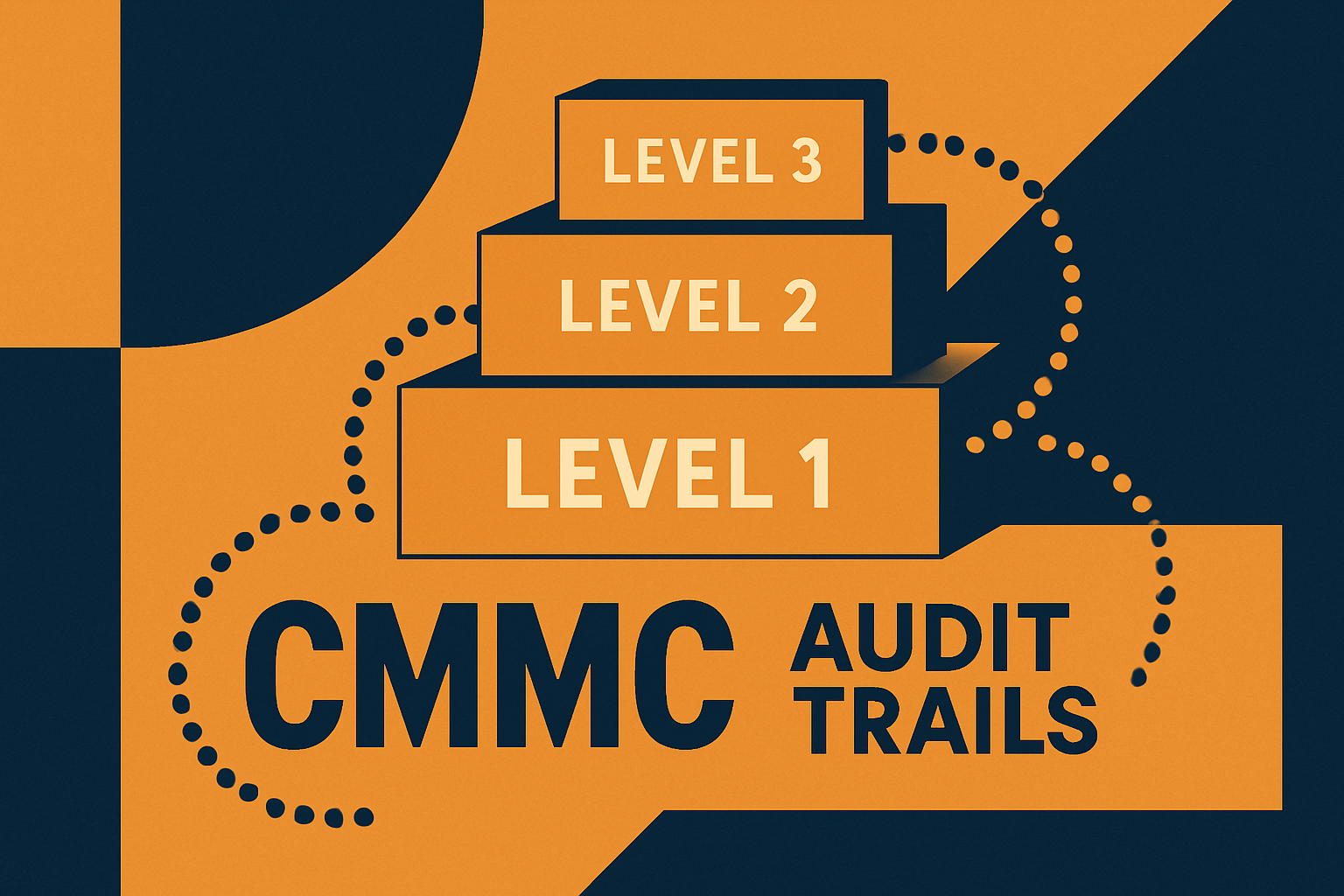
We map your current technical controls and written policies against every applicable CMMC Level 1, 2, or 3 practice, producing a gap register that prioritizes findings by risk and assessment impact - not alphabetical order.
Plan of Action and Milestones Development
Every gap that cannot be closed immediately gets a written Plan of Action and Milestones entry with a named owner, a target date, and interim mitigations - in exactly the format a C3PAO and the Defense Contract Management Agency will expect to see.
Technical Control Implementation
We implement the technical controls your gap analysis identifies - multi-factor authentication, encrypted data handling, audit logging, access control, and configuration hardening - against your actual infrastructure, not a generic template.
Policy and Procedure Documentation
We write your system security plan, incident response plan, configuration management policy, and the full supporting policy library in the format the CMMC Assessment Process expects, with evidence artifacts pre-organized for assessment day.
Assessment Readiness Review and Evidence Package
Before your C3PAO engagement begins, we run an internal readiness review against the CMMC Assessment Process guide, organize your evidence package, and brief your team on what assessors will ask - so there are no surprises in the room.
Specialty Programs
Specialized CMMC Compliance for Government Contractors Programs
DOD CYBERSECURITY
Need DoD-grade cybersecurity beyond CMMC?
CMMC certifies the framework. The day-to-day operational stack is something else: DFARS 252.204-7012 incident reporting, CUI segmentation, audit-ready logging. Our DoD cybersecurity engagement covers what comes after the certification.
See DoD Cybersecurity →
CMMC MASTERCLASS
Free CMMC Compliance Masterclass for govcon leaders.
On-demand session covering the gaps that catch most contractors off guard: scope mistakes, evidence quality, SPRS scoring traps, and the 90-day path to a defensible posture under the September 2025 final rule.
Join The Masterclass →What CMMC Compliance for Government Contractors Actually Requires
The Department of Defense established CMMC because self-reported cybersecurity adequacy was not protecting Controlled Unclassified Information across the defense industrial base. The DoD CMMC program office has confirmed that as of the September 2025 final acquisition rule, contracts at Level 2 and above require third-party assessment by a Certified Third-Party Assessment Organization before award. CISA also maintains cybersecurity supply-chain risk management guidance that directly underpins many of those control requirements.
The question is no longer whether your organization will be assessed – it is whether your environment, your documentation, and your team will be ready when the assessor arrives. Contractors who treat certification as a documentation exercise, without the underlying technical controls to back it up, are learning that lesson at significant cost. Whether you are a prime contractor, a subcontractor, or a supply-chain vendor handling Controlled Unclassified Information, your certification posture directly affects your ability to win and retain DoD work. You can also explore our CMMC compliance services for New Jersey government contractors if you prefer a regional point of contact.
Our approach differs from generic compliance providers in one specific way: we scope first. Most firms hand you a gap analysis questionnaire before they understand what data you actually handle or where it lives. We spend the first phase of every engagement defining the assessment boundary precisely – which systems are in scope, which are out, and why – because that decision determines everything downstream. Gap analysis then produces a practice-by-practice finding register tied to your actual infrastructure. Remediation is executed against a written Plan of Action and Milestones with named owners and target dates, not a slide deck. And we assemble the evidence package in the format the CMMC Assessment Process guide specifies, so the C3PAO is working with organized artifacts, not a file dump.
Xact IT Solutions has maintained its own independently audited cybersecurity posture since 2021, assessed annually by Versprite against the GTIA Cybersecurity Trustmark – which maps to the CIS Critical Security Controls Information Group 2 supplemented by ISO 27001 controls. We hold our own environment to the same standard we build for yours.
This engagement is built for defense contractors, manufacturers, and supply-chain vendors in the 25-to-500-employee range who handle Controlled Unclassified Information and do not have a full-time compliance officer or in-house CMMC expertise. It is particularly well suited to Level 2 contractors facing a C3PAO assessment window and Level 3 contractors managing sensitive defense program data. It is also the right fit for Level 1 contractors who need a structured annual self-assessment that will hold up under Defense Contract Management Agency review. If you are looking for a paper-only exercise without underlying technical control implementation, we are not the right firm.

Free Resource
Get The CMMC Readiness Reality Check
- ✓15 yes/no questions across Scope, Controls, Policies, Vendors
- ✓Scoring rubric tells you whether to book a C3PAO or fix scope first
- ✓Free PDF - written for govcon leadership, not auditors
No spam, ever. We send you the resource and a short follow-up. Unsubscribe anytime.
How It Works
How We Deliver CMMC Compliance for Government Contractors
1
Scope and Assess
2
Strategize and Plan
3
Implement Controls and Documentation
4
Validate and Sustain
Free Resource
Take The Compliance Readiness Assessment
- ✓15 questions mapped to your framework
- ✓Identify gaps before your next audit
- ✓Free readiness report by email
No spam, ever. We send you the resource and a short follow-up. Unsubscribe anytime.
Why Government Contractors Work With Xact IT Solutions on CMMC Compliance
Xact IT Solutions has been operating since 2004 – more than 20 years building and maintaining security environments for organizations that cannot afford a breach or a failed audit. In that time, not one client has suffered a breach. That is not a marketing line. It reflects a deliberate approach to building environments with layered controls rather than minimum-viable security. We hold our own posture to the same standard: independently audited annually since 2021 by Versprite against the GTIA Cybersecurity Trustmark, which maps to the CIS Critical Security Controls Information Group 2 supplemented by ISO 27001 controls.
We carry hands-on experience with HIPAA, SOC 2, and CMMC compliance for government contractors across multiple frameworks, and we are familiar with the specific documentation and evidence expectations each one carries. The NIST Manufacturing Extension Partnership has published extensive guidance on CMMC readiness for manufacturers – we apply that framework in practice. The NIST SP 800-171 publication is the authoritative reference underlying CMMC Level 2, and it is what we work from directly. You can also learn more about our broader managed security services that support ongoing CMMC compliance after certification.
A typical engagement runs in four phases over 12 to 24 weeks, depending on your starting posture and target level. In weeks one and two, we conduct scope definition and kickoff interviews. Weeks three through six cover gap analysis and Plan of Action and Milestones development, with a written deliverable at the end of that phase. Weeks seven through sixteen cover technical control implementation and policy authoring, with weekly check-ins and a shared progress tracker your team can view at any time. The final phase – evidence package assembly, internal readiness review, and assessment-day preparation – typically runs four to six weeks and concludes with a staff briefing.
In the first 30 days, clients have their gap register in hand and their Plan of Action and Milestones drafted – a concrete artifact they can show a contracting officer or prime contractor immediately. By 60 days, the highest-priority technical controls are implemented and the first sections of the system security plan are in draft. By 90 days, most Level 2 contractors are in active remediation with a clear line of sight to assessment readiness. There is no ambiguity about what happens next.
Frequently Asked Questions About CMMC Compliance for Government Contractors
What does a CMMC compliance engagement cost?
The investment depends on your organization’s size, your target certification level, and the gap between your current posture and the requirements. A Level 1 structured self-assessment engagement looks very different from a Level 2 C3PAO preparation program for a 200-person manufacturer. We discuss scope and investment on the strategy call – it is a free 20-minute conversation with no obligation, and you will leave with specific guidance you can use regardless of whether you engage us.
How long does it take to reach CMMC certification readiness?
Most Level 2 engagements run 12 to 20 weeks from scope definition to C3PAO assessment readiness, depending on your starting posture. Organizations with a mature security baseline may move faster. Level 3 engagements typically require 18 to 30 weeks given the additional practice requirements and the government-led assessment process. We build the timeline around your contract award dates so certification is never the reason you miss a deadline.
What happens on the strategy call?
The strategy call is a free 20-minute conversation with our team – not a sales pitch. We will ask about your contract situation, your target certification level, your current security posture, and your timeline. You will leave with a clear picture of what a CMMC compliance readiness engagement involves, what the common gaps are for organizations at your size and level, and specific next steps you can act on immediately. There is no obligation and no follow-up pressure.
How is Xact IT Solutions different from other CMMC compliance providers?
Three things separate us from most firms in this space. First, we scope before we analyze – a gap analysis without a defined boundary is guesswork, and an inaccurate scope will surface during your C3PAO assessment at the worst possible moment. Second, we implement the technical controls ourselves rather than handing you a remediation list and walking away. Third, we hold our own environment to the same standard we build for yours – independently audited annually by Versprite against the GTIA Cybersecurity Trustmark. We are not advising from the outside. We live inside the same framework.
Do you serve government contractors outside New Jersey?
Yes. CMMC compliance for government contractors is a national practice. We serve defense contractors, manufacturers, and supply-chain vendors across the United States. Our team is based in Marlton, NJ, but we build environments that do not require onsite visits by design – if your compliance partner needs to be in your building to do their job, that is a limitation of their approach, not a requirement of the work. Geography is not a barrier.
Your C3PAO Window Is Narrowing. Let's Make Sure You Are Ready.
The strategy call is 20 focused minutes with our team – no obligation, no pressure. We will clarify what certification level applies to your contracts, identify where your posture likely stands today, and give you a realistic picture of what assessment readiness looks like for your organization. You leave with specific guidance you can use immediately.
Or call us: (856) 282-4100
The Benefits
What CMMC Compliance Delivers for Your Business
- Contracts awarded without delay - your certification is in place before the contracting officer asks for it, so CMMC is never the reason you lose a DoD award.
- A defensible posture on assessment day - because scope, technical controls, and documentation are aligned before the C3PAO arrives, not assembled the week before.
- A written Plan of Action and Milestones your prime contractor or contracting officer can see today - concrete evidence of progress that builds confidence before you are fully certified.
- No scramble at renewal - an ongoing compliance calendar means you are never rebuilding your evidence package from scratch ahead of the next assessment cycle.
- Reduced self-assessment liability - Level 1 contractors with a structured, documented annual self-assessment are significantly better positioned under Defense Contract Management Agency review than those relying on informal processes.
- A team that holds its own environment to the same standard - zero client breaches in 20+ years and an independently audited cybersecurity posture mean the controls we build for you are the same ones we operate ourselves.